AI-NATIVE SOFTWARE ENGINEER
Integrating AI into software development goes far beyond basic code completion. I design robust "agent harnesses"—ecosystems of rules, memories, and structured workflows—that transform raw LLMs into context-aware engineering partners. By orchestrating multiple AI tools and optimizing their environments, I build complex systems faster while maintaining rigorous architectural consistency and quality.
TOOLS & ECOSYSTEM
Multi-Agent Orchestration
Rather than relying on a single tool, I route tasks to the most capable agent. I leverage Cursor IDE for deep, context-aware codebase editing, Claude Code for autonomous terminal and repository operations, and GitHub Copilot for rapid inline suggestions. Navigating seamlessly between them is the foundation of my workflow.
Agent Harnesses & Context
I extend AI capabilities through project-specific Rules (.rules), custom agent Skills, and MCP integrations. By shaping the AI’s environment, I ensure that models operate with senior-level context from day one, flawlessly adhering to the project's exact architectural and stylistic guidelines.
Structured Workflows
I eliminate LLM unpredictability by enforcing rigorous development frameworks. Using methodologies like OpenSpec for precise product specifications and Superpowers for systematic processes (such as TDD, planning, and debugging), I guide agents through predictable, verified development cycles rather than one-shot improvisation.
LLM Memory & Knowledge Bases
Agents are only as effective as their context. I implement long-term, queryable memory systems using Markdown-based LLM Wikis (inspired by Andrej Karpathy) and persistent state files like CLAUDE.md and AGENTS.md. This ensures models fully understand the project's history, business logic, and the "why" behind the codebase.
AI-POWERED PROJECTS
Projects designed, developed and shipped with AI as a core collaborator
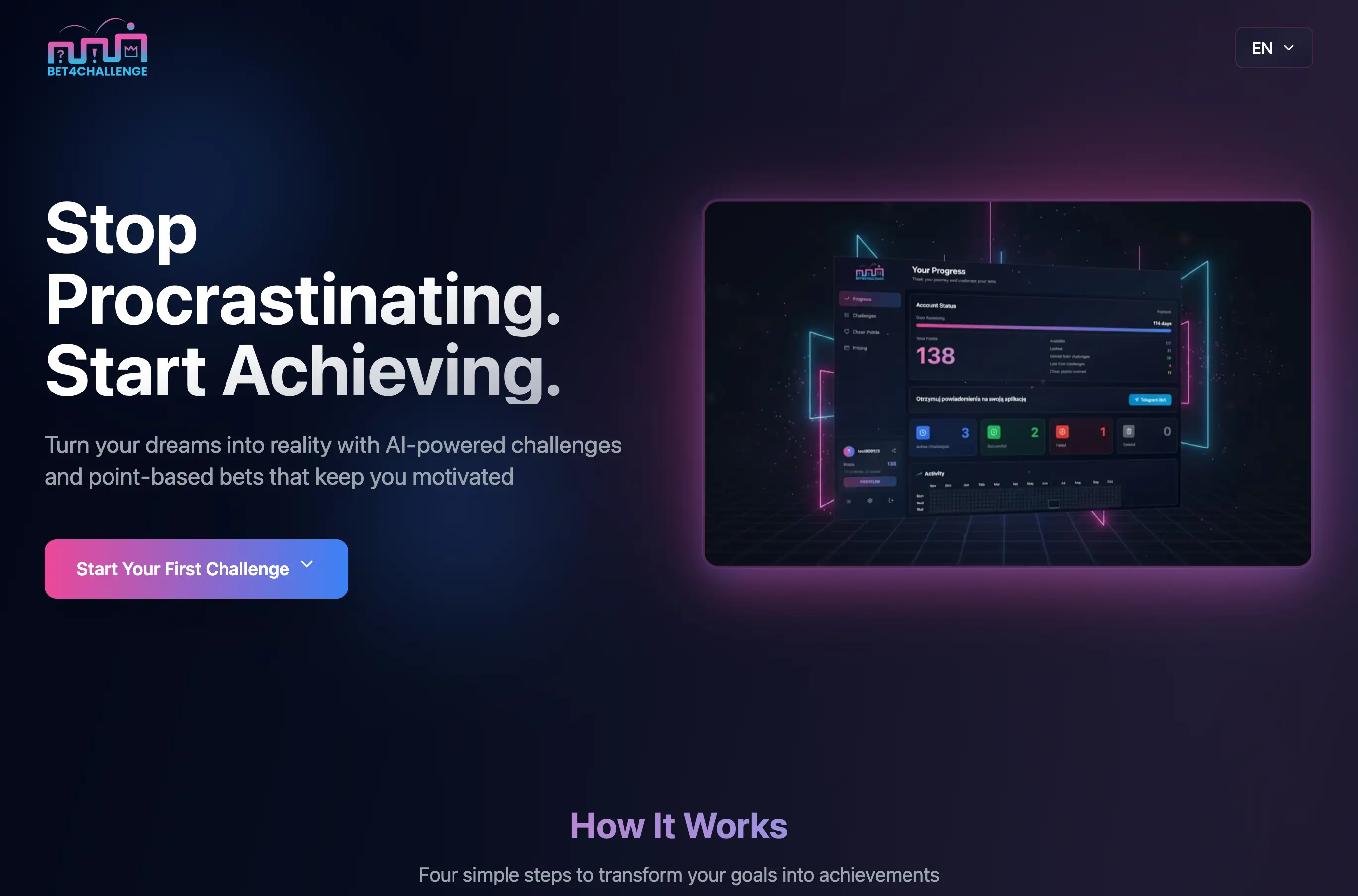
bet4challenge.com
An application for creating challenges, placing bets on their completion, and tracking progress. Users earn points for completed challenges and lose points for challenges they fail to complete. The system also includes an advanced admin panel for managing users, their accounts, onboarding, notifications, and predefined challenges. The application was built using bolt.new, mainly with the Sonnet 4.5 model. Data is stored in Supabase, and payments are handled through Stripe. One of the challenge creation flows uses the OpenAI API — the admin panel allows administrators to manage the system prompt and the model responsible for generating these challenges.
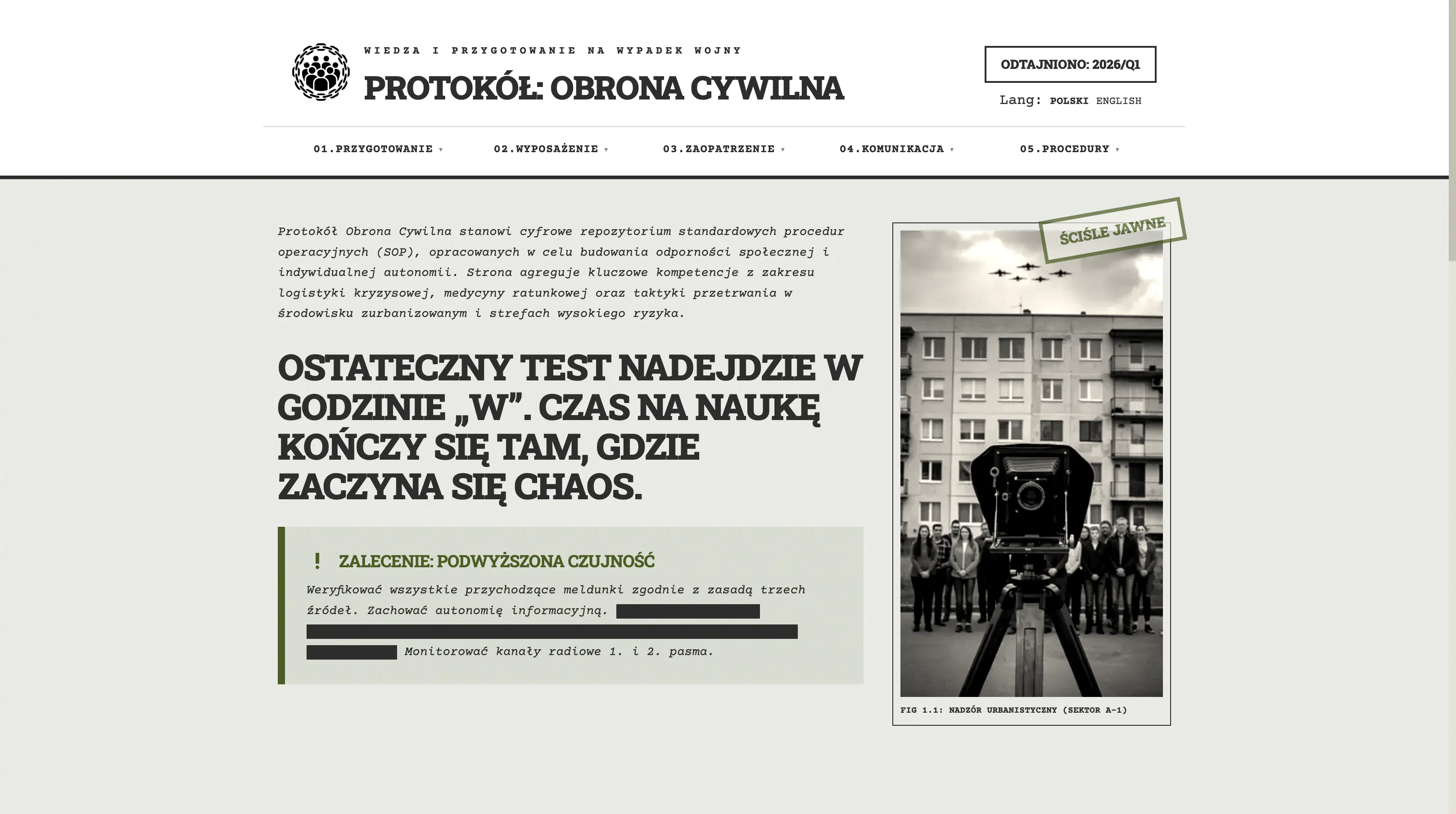
protokol-obrona-cywilna.pl
The project was inspired by my father. The visual design was created in Google Stitch, and the application boilerplate was built using Next.js. The project was further developed in Cursor, primarily using the Sonnet 4.5 and Gemini 3 Flash models. The articles were created using the Deep Research feature in NotebookLM. The process involved organizing the knowledge into main categories, then breaking each category into several articles that were generated sequentially. Each new article was created using a very short summary of the previous ones to avoid duplicating content and to maintain consistency across the entire material.
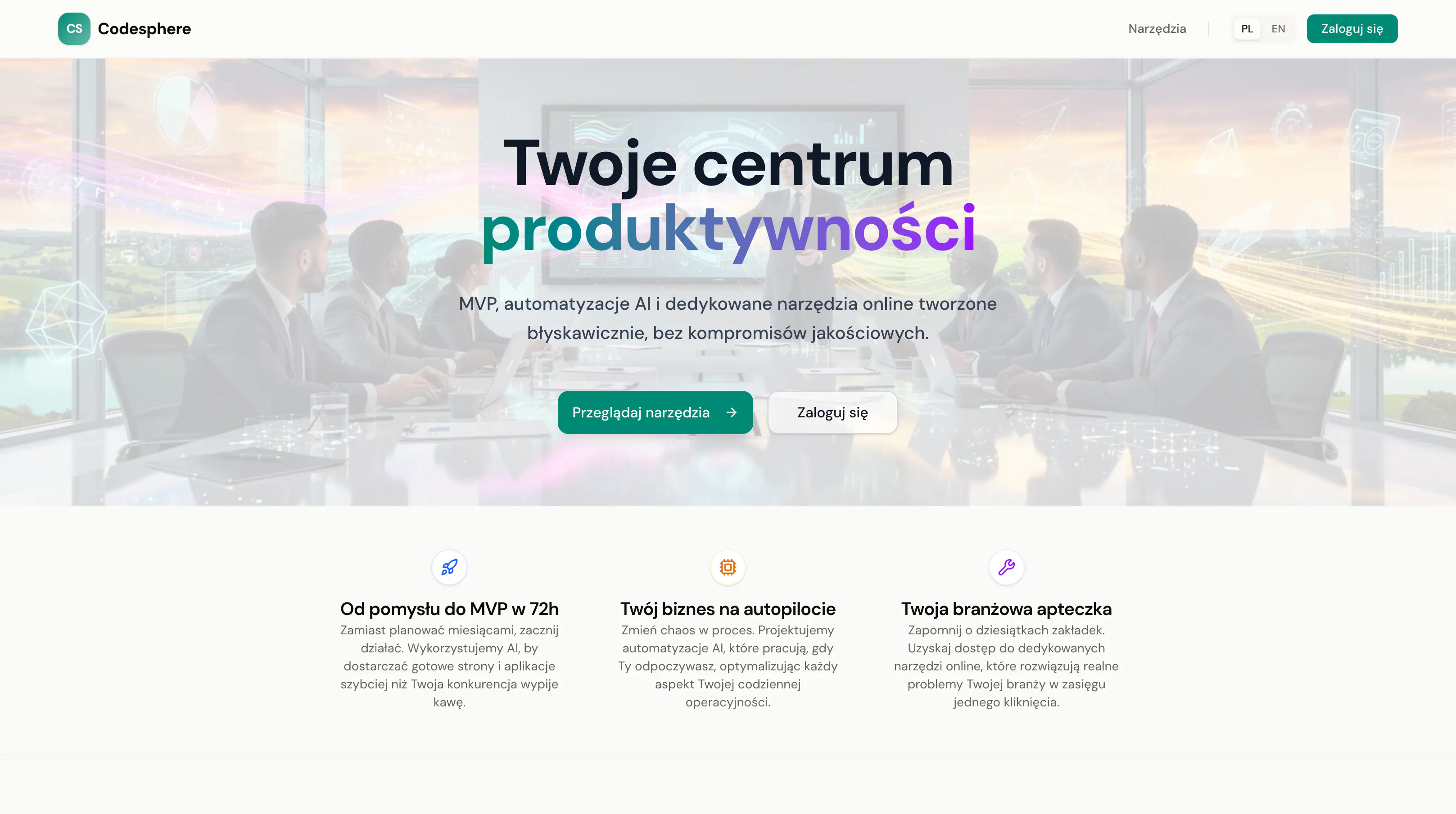
codesphere.app
The website serves as a company profile, a platform with online tools, and a client panel. The client panel allows managing clients, assigning them dedicated tools, and managing the process of building automations. The application is based on a Next.js boilerplate. The database is hosted in Convex, and authentication is handled by Clerk. The entire project was developed in Cursor using various LLM models, mainly Opus 4.5. Hero images for the tools were generated using Flux 2 Pro. Integration with n8n was implemented using n8n MCP. The Pro tools use the OpenAI API and Google Nano Banana.
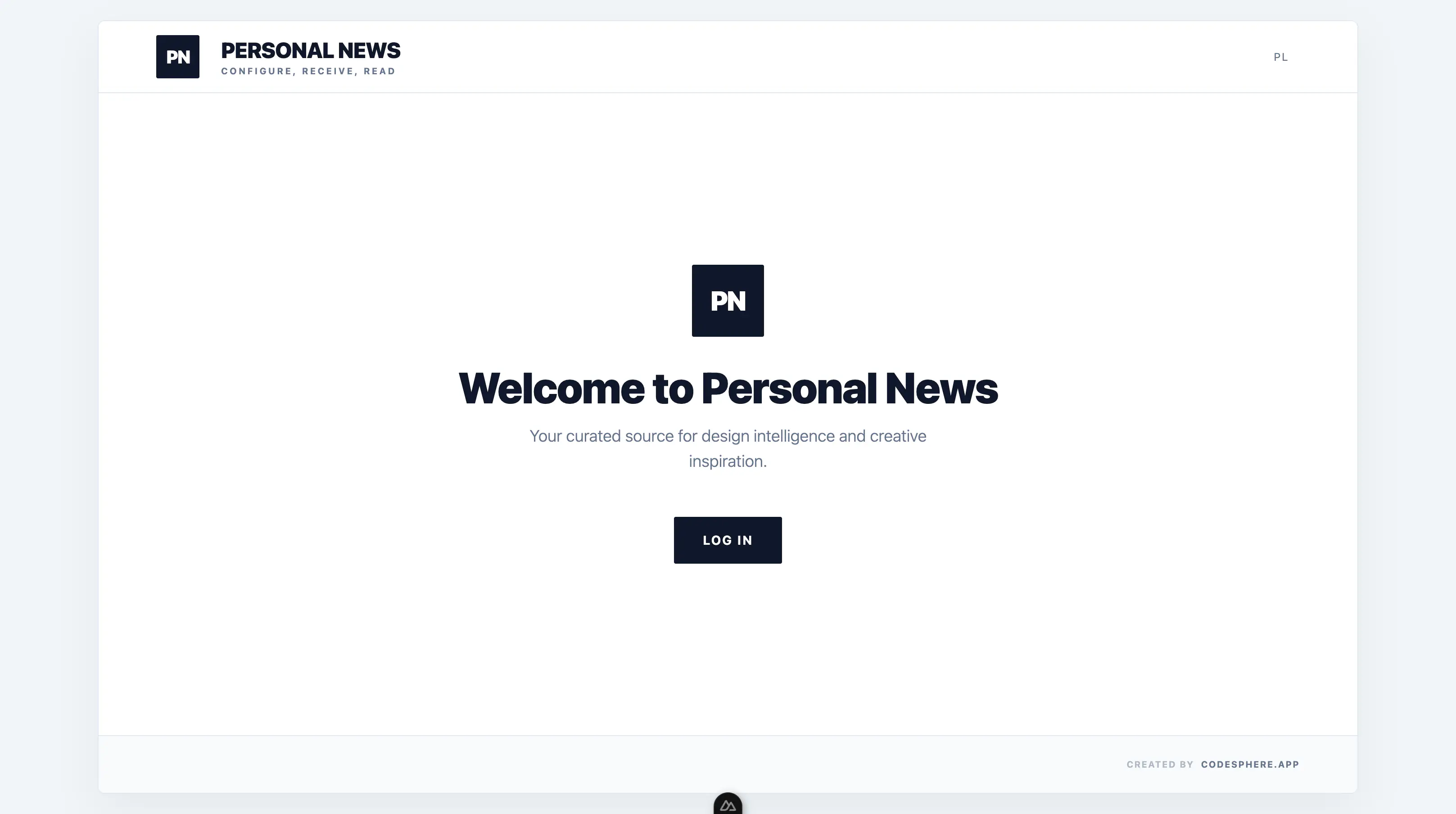
personal-news
An application for receiving article previews from predefined or custom RSS feeds, based on created configurations. The main layout was created in Google Stitch and ported to Nuxt.js. The workflow was built in n8n using n8n mcp and configured to work with Convex and RSS.
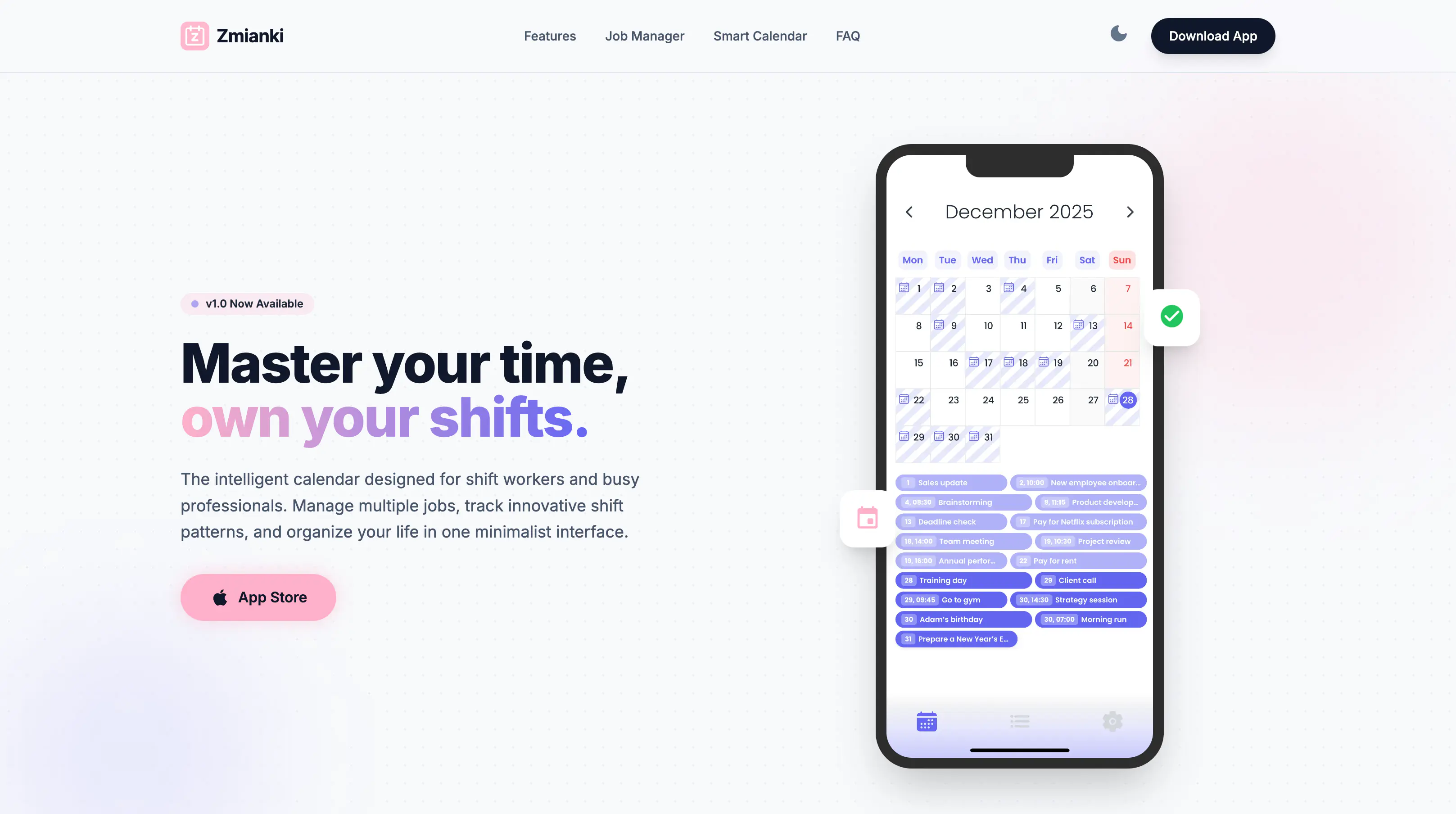
Zmianki - iOS Application
A mobile iOS application for managing shift work and creating calendar events. It allows users to set notifications and switch between different calendar views. Additionally, a static landing page was created: the design was generated in Google Stitch, while the code and content were produced in Cursor.